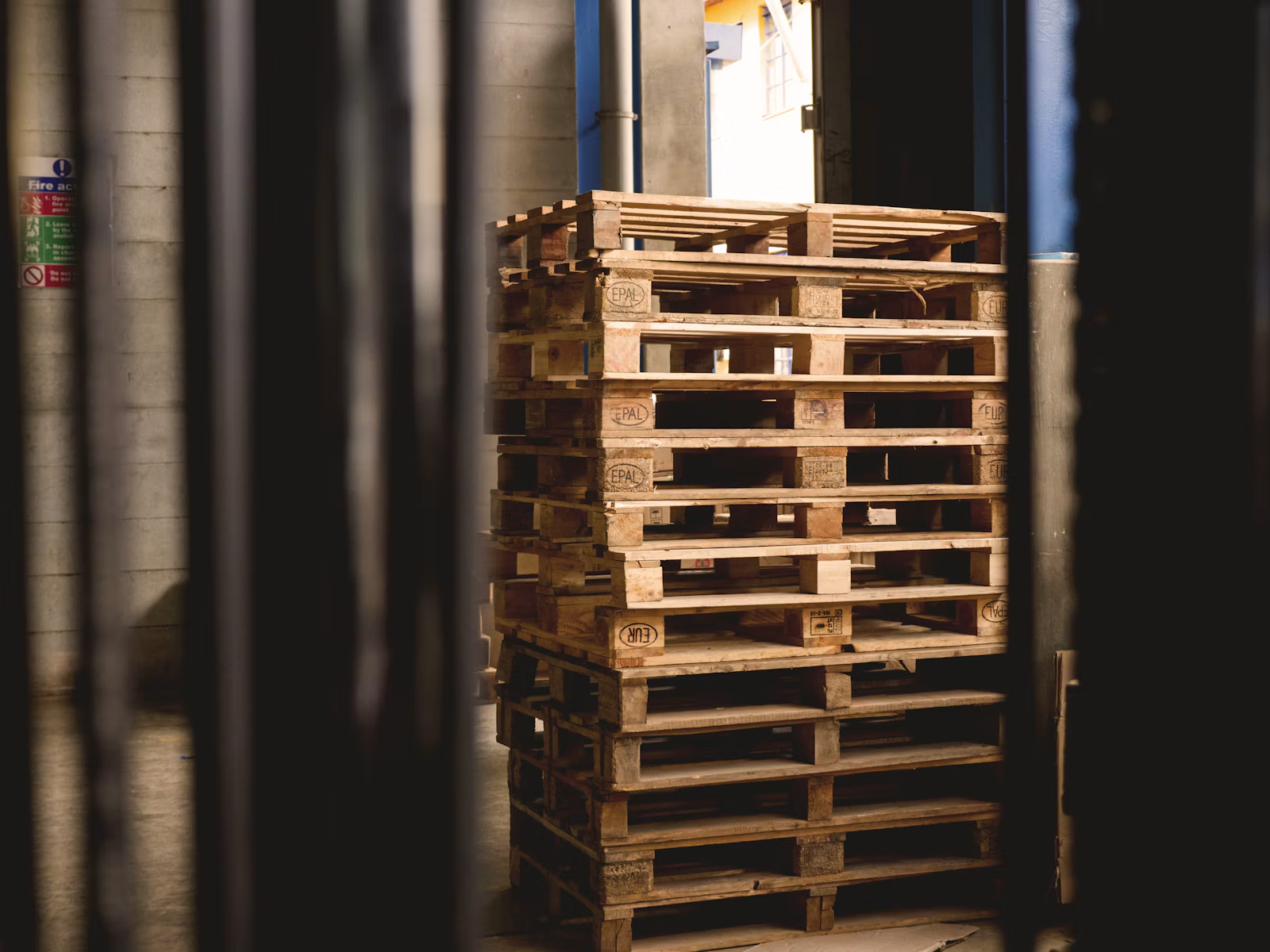
The EPAL pallet, officially known as the EUR-pallet, is the backbone of freight movement across Europe and increasingly in global trade lanes that touch European supply chains. Built to a strict specification maintained by the European Pallet Association (EPAL), these wooden pallets are manufactured to exacting dimensional and load-bearing standards so that a pallet produced in Poland performs identically to one produced in Portugal. For buyers evaluating suppliers, understanding what separates a genuine EPAL pallets manufacturer from a generic pallet producer is essential to protecting both product safety and supply chain efficiency.
What Makes a Pallet "EPAL"
Not every wooden pallet that looks like a Euro-pallet is actually certified. A true EPAL pallet measures 800 x 1200 mm, uses nine blocks and specific nail patterns, and is stamped with the EPAL logo along with a licence number that identifies the manufacturing plant. That stamp is the result of an audited licence agreement, not a design choice any carpenter can copy. Manufacturers must pass regular quality inspections covering timber moisture content, nail placement, block dimensions, and load testing before they are permitted to produce and brand pallets under the EPAL mark.
Why the Manufacturer You Choose Matters
Pallets are a recurring cost for most logistics-heavy businesses, and the gap between a licensed producer and an unlicensed one shows up quickly in day-to-day operations.
- Exchange compatibility: Genuine EPAL pallets participate in the open pallet exchange pools used across European logistics networks. A counterfeit pallet can be rejected at the dock, stalling a shipment.
- Load safety: EPAL pallets are rated to carry up to 1,500 kg in dynamic use and significantly more in static racking. Substandard timber or poor nailing undermines that rating and creates real warehouse hazards.
- Repair standards: Licensed manufacturers also operate under repair rules that keep refurbished pallets within spec, so a repaired EPAL pallet still performs like a new one.
- Treatment compliance: Reputable producers heat-treat timber to ISPM 15 standards, which is mandatory for pallets crossing international borders.
How Manufacturing Quality Is Controlled
EPAL maintains its network of licensed manufacturers through third-party audits rather than self-certification. Inspectors visit production sites to check incoming timber quality, verify that nail guns are calibrated to the correct pattern, and sample finished pallets for dimensional accuracy. A producer that fails an audit can lose its licence, which is why buyers sourcing pallets for export or for participation in pallet pools should always confirm a supplier's current licence status rather than relying on the stamp alone.
Evaluating a Pallet Manufacturer: A Practical Checklist
Businesses bringing on a new pallet supplier, whether for a single large order or an ongoing contract, benefit from working through a short diligence checklist before committing.
1. Confirm the Licence
Ask for the manufacturer's current EPAL licence number and cross-check it where possible. A legitimate producer will provide this without hesitation.
2. Inspect Timber Sourcing
Ask whether the timber is kiln-dried and sourced from sustainably managed forests. Moisture content directly affects pallet weight, durability, and resistance to warping during transit.
3. Review Production Capacity
For ongoing supply, confirm the plant's daily output and whether it can scale during peak shipping seasons without substituting in uncertified stock.
4. Ask About Repair and Buyback Programs
Many manufacturers also run repair lines and buyback schemes for damaged pallets, which can meaningfully lower total pallet cost over a year of operations.
5. Check Heat-Treatment Documentation
For any shipment crossing a border, request ISPM 15 heat-treatment certificates alongside the delivery, since customs authorities can and do inspect for the stamp.
New-Build Versus Reconditioned EPAL Pallets
Buyers often assume new pallets are the safer choice, but a well-run reconditioning line, operating under the same EPAL repair standards, can deliver pallets that meet identical load and safety requirements at a lower cost and with a smaller environmental footprint. The deciding factor is whether the reconditioning facility itself holds a valid licence and follows documented repair criteria, rather than simply patching boards to pass a visual check.
The Bigger Picture: Pallets as Supply Chain Infrastructure
It is easy to treat pallets as a commodity line item, but for any business moving goods through European distribution networks, pallet quality has a direct effect on damage rates, warehouse safety, and how smoothly shipments clear customs and exchange pools. Working with a properly licensed EPAL pallets manufacturer, and periodically auditing that relationship, is one of the simpler ways a logistics or manufacturing operation can reduce friction further down the supply chain.
Final Thoughts
Choosing a pallet supplier rarely gets the scrutiny it deserves, yet the difference between a licensed EPAL manufacturer and an uncertified producer can affect everything from load safety to whether a shipment clears a border without delay. A short supplier audit, focused on licence verification, timber sourcing, and heat-treatment documentation, is a small investment that protects a much larger logistics operation.