
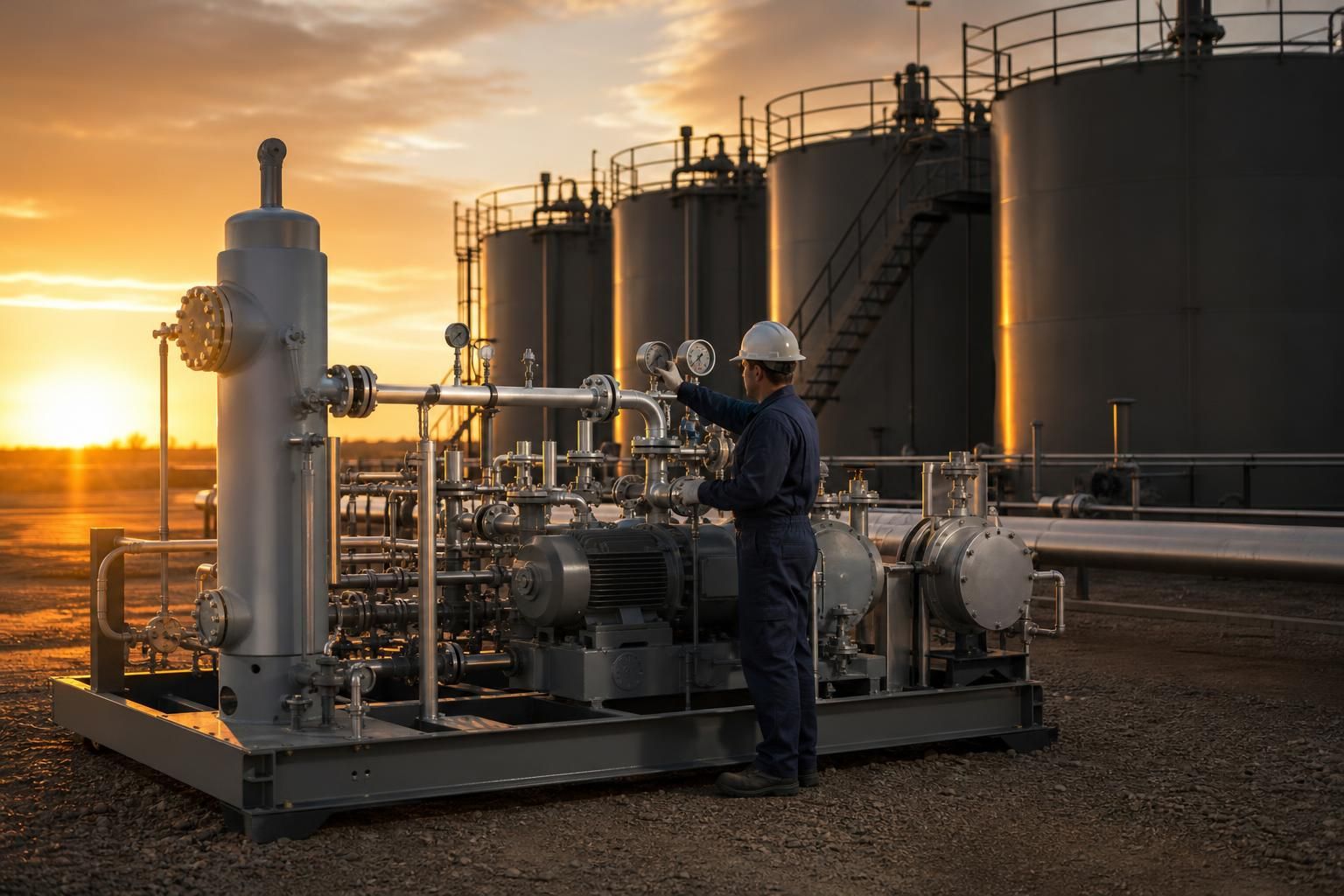
Every atmospheric storage tank on a production site breathes. Crude and condensate give off vapors as they warm, as tanks fill, and as liquids move through separators and heater treaters. Left alone, those vapors vent or get flared, and the operator loses saleable gas while carrying emissions exposure. A vapor recovery unit, usually shortened to VRU, captures that gas and sends it back into the sales line or a fuel system. In 2026, with tighter attention on methane and VOC control across the United States, more operators are asking how to pick the right equipment and the right partner.
Start with the vapor, not the equipment
Before you talk to any supplier, get a realistic picture of the gas you need to capture. That means tank count and size, throughput, oil or condensate gravity, operating temperatures, and how much the flow swings between day and night or between production cycles. A unit sized for an average day can struggle on a hot afternoon, and a unit sized for the peak can short-cycle most of the year. Good vendors will ask for this information early. If a quote arrives without a single question about your site, treat that as a warning sign.
What a capable vapor recovery unit manufacturer should explain
Selecting a vapor recovery unit manufacturer is less about a catalog and more about how well the company understands field conditions. A few questions help separate engineering partners from box sellers:
- How was the unit sized for your vapor load, and what assumptions sit behind the number?
- What happens when tank pressure or gas composition changes? How does the control logic respond?
- Where does the recovered gas go, and what pressure does the discharge point require?
- What is the plan for liquids that drop out of the gas stream?
- Which components are standard, and how easy are they to source if something fails?
Clear, specific answers show that the supplier has done this before. Vague answers usually mean the details will surface at commissioning, when changes are most expensive.
Compressor selection drives reliability
The compressor is the heart of any VRU, and it is where most operating headaches begin. Low suction pressures, wet gas, and variable flow all put stress on the machine. Many operators evaluating a vapour recovery compressor look at how it handles liquid carryover, how it is lubricated and cooled, and what maintenance it needs at the interval their crews can realistically support. A compressor that is technically efficient but requires specialist visits every few weeks may cost more in the long run than a simpler design that your own technicians can service.
Ask about the driver as well. Electric drives are common where reliable power is available. Remote sites without grid power may need a gas-driven or alternative arrangement, which changes the footprint, the permitting picture, and the maintenance plan.
Controls, safety and compliance
A vapor recovery system is not only a compressor on a skid. It includes suction control, pressure relief, shutdowns, and instrumentation that keeps tanks within safe limits. Confirm how the unit protects the tanks from both over-pressure and vacuum, and how alarms and shutdowns are reported to your control room or pumper. If your site is subject to federal or state air rules, ask the supplier how their design supports your monitoring and recordkeeping. Compliance remains the operator's responsibility, but a supplier who knows the rules can save you real time.
Think about service from day one
Even the best equipment needs support. Find out where spare parts are held, who answers the phone when a unit trips at night, and whether field technicians are available for startup and troubleshooting. Remote monitoring can help catch problems early, but it does not replace people who can reach the site. For operators with several tank batteries, standardizing on one design can simplify training and spares, as long as each site is still sized for its own conditions.
Compare total cost, not just the quote
Purchase price is only one part of the picture. Consider installation, tie-in work, power or fuel, scheduled maintenance, and downtime. Then weigh those against the value of recovered gas and the reduction in vented or flared volumes. The result will differ by site, so avoid relying on a generic payback figure from a brochure. Ask the supplier to walk through the economics using your numbers and to state their assumptions plainly.
Practical steps before you buy
- Collect tank, throughput and fluid data for each site.
- Define where the recovered gas will be delivered and at what pressure.
- Request written sizing assumptions from each supplier.
- Review the control and safety scope, not just the skid hardware.
- Confirm startup support, spare parts access and service coverage.
Frequently asked questions
What does a vapor recovery unit do? It collects vapors from storage tanks and other low-pressure sources and compresses them so the gas can be sold, used as fuel, or otherwise handled instead of being vented or flared.
Can one unit serve several tanks? Often yes, when the tanks are connected by a common vapor header and the unit is sized for their combined vapor load.
How do I know if my site is a good candidate? Sites with steady liquid throughput, warm product, and a nearby gas outlet tend to be strong candidates, but a site-specific review is the only reliable way to decide.
What information should I give a supplier? Tank sizes, production rates, fluid properties, operating temperatures, available utilities, and the intended gas destination.
Is remote monitoring necessary? It is not required, but it helps operators spot trips and performance drift sooner, especially at unmanned locations.
The right choice in 2026 comes down to sizing discipline, a dependable compressor, sound controls, and service you can count on. Operators who press suppliers on those points tend to end up with equipment that keeps capturing gas long after the commissioning day has passed.